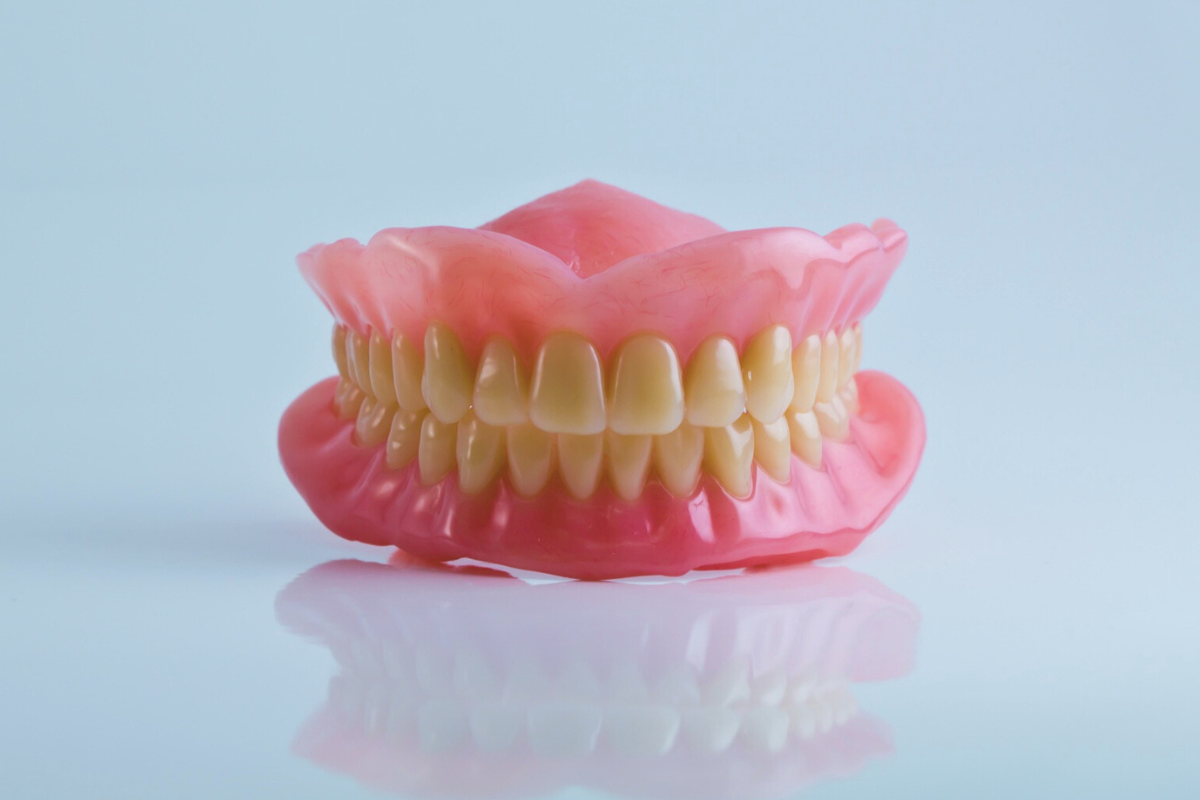
If you’re missing several teeth or an entire row of teeth, dentures can restore more than the appearance of your smile. They can help you eat, speak and feel more comfortable in everyday situations. But getting used to dentures takes some time, and taking care of them properly matters just as much as choosing the right type.
If you’re researching things to know about dentures, start with these five basics. They can help you understand what to expect before and after receiving a new set.
1. Denture Hygiene is Important
Dentures aren’t natural teeth, but they still collect food particles, plaque and other buildup. Cleaning them every day helps keep them looking better and supports a healthier mouth.
For removable dentures, a typical cleaning routine includes:
- Rinse the dentures to remove loose food particles.
- Gently brush all surfaces with a denture brush or another appropriate soft-bristled brush.
- Use a nonabrasive denture cleanser as recommended.
- Rinse the dentures thoroughly before putting them back in your mouth.
- Clean your remaining natural teeth, gums and tongue as well.
Avoid using hard-bristled brushes, abrasive household cleaners or bleach on your dentures. These products can damage the denture material. Dentures should also never be placed in hot or boiling water because heat can cause them to warp.
If you use a commercial denture cleanser, follow the manufacturer’s directions. Cleansing solutions are intended for the denture after it has been removed from your mouth, not while you’re wearing it.
Good denture hygiene also means paying attention to the tissues underneath the appliance. If you have remaining natural teeth, those teeth still need regular brushing and cleaning between them.
2. Dentures Should be Removed When Not in Use
One of the advantages of removable dentures is that you can take them out for cleaning and give your mouth a break.
For many patients, removing full or partial dentures at night is recommended. Denture-wearing guidance from the American Dental Association and National Institute on Aging recommends keeping removable dentures out while sleeping and storing them appropriately when they’re not being worn.
When your dentures are out, clean your mouth gently and check your gums for areas that look irritated or sore. Store the dentures in water or an appropriate denture-cleansing solution according to your dentist’s instructions. Keeping them moist helps prevent the material from drying out and losing its proper shape. Never use hot water.
If you have an unusual wearing schedule or a specific type of denture, follow the instructions provided by your dental professional.
3. Dentures Are Sometimes Uncomfortable
It is natural to feel some discomfort when you start using dentures. You might have an alien feeling in the mouth initially. Mouth sores and uneasiness can sometimes occur. One thing people need to know about dentures is that those wearing dentures may expect to salivate more than they normally do without food around. However, this discomfort is often temporary, as you may find improvement when the dentures are properly fitted into the soft tissues of your mouth.
4. Dentures Need Practice
Eating and talking are two major privileges you get with your set of dentures. However, it might get some time to get used to them. You might feel your dentures move when chewing food. You need to try eating in different ways to learn about the most comfortable way. Usually, chewing with molars and pre-molars is most suitable. While speaking, some sounds and words might not come out like they used to. Your tongue needs to relearn a lot of things with your dentures. Speech practice is recommended to overcome such issues.
5. Dentures Need Repairs and Replacements
One of the most important things to know about dentures is that they aren’t necessarily a one-time treatment.
Your mouth changes over time. The tissues and bone supporting a denture can change, which may eventually affect the way the appliance fits. A denture that once felt secure may become loose, uncomfortable or less effective at chewing.
Depending on the situation, a dentist may recommend an adjustment, reline or replacement.
There’s no single replacement date that applies to every patient. Instead, the condition of the denture and the health of the tissues supporting it should be evaluated individually. The ADA recommends dental evaluation when it has been more than five years since a denture was fabricated, while Picasso’s denture guidance explains that changes in supporting tissues can lead to discomfort or instability and may call for a reline.
Don’t try to repair, bend or reline a denture yourself. A home repair can damage the appliance or alter its fit.
What Types of Dentures Are Available?
Not everyone who needs dentures has the same needs.
Full dentures replace all of the teeth in the upper or lower arch. They may be appropriate when all remaining teeth are missing or cannot be predictably retained.
Partial dentures replace one or more missing teeth when some natural teeth remain. They can fill gaps while providing a removable option for restoring function and appearance.
Implant-supported dentures use dental implants to provide attachment and additional stability for the denture. They are different from conventional removable dentures and require an evaluation to determine whether implants are appropriate.
Picasso Dental & Orthodontics’ Mansfield denture service describes conventional full dentures, immediate dentures, overdentures, implant-supported dentures and partial dentures as available denture approaches, with the appropriate option depending on the patient’s teeth, oral tissues and individual needs.
If you’re comparing different denture options, choosing the right dentures for your needs can help you understand the factors to consider before making a decision.
If you’re looking for denture treatment locally, you can also learn more about dentures in Mansfield and the options available.
When Should You See a Dentist About Your Dentures?
Don’t wait for a denture problem to become severe before asking for help.
Schedule an evaluation if you notice:
- Persistent gum soreness or mouth sores
- A denture that feels loose or unstable
- Difficulty chewing that doesn’t improve
- A cracked, broken or damaged denture
- Changes in the way your denture fits
- Repeated irritation in the same area
- Difficulty speaking because the denture keeps moving
- A need to use increasingly more adhesive to keep the denture in place
Regular dental visits remain useful even if you no longer have natural teeth. Your dentist can check the fit and condition of your dentures and examine the soft and hard tissues of your mouth. If you still have natural teeth, those teeth also need ongoing care.
Frequently Asked Questions About Dentures
How long does it take to get used to new dentures?
It varies from person to person. Speaking, chewing and overall comfort can feel different initially, and some patients need one or more adjustments before the denture feels comfortable.
Can I sleep with my dentures in?
Removable dentures are generally recommended to be removed while sleeping. Removing them gives the oral tissues time without the appliance and allows you to clean both the dentures and your mouth.
How should I clean my dentures?
Rinse them, gently brush them with an appropriate brush and denture cleanser, and follow the storage instructions provided by your dental professional. Avoid hot water, hard-bristled brushes and abrasive household cleaners.
Can dentures be repaired or adjusted?
Yes. Depending on the problem, a dentist may recommend an adjustment, reline or replacement. Avoid attempting repairs or modifications at home.
Are dentures the only option for replacing missing teeth?
No. Depending on your oral health and individual circumstances, other options may include bridges or dental implants. A dental examination can help determine which choices are appropriate for you.
Final Thoughts
The most useful things to know about dentures aren’t just about getting used to wearing them. Daily cleaning, proper storage, regular dental evaluations and paying attention to changes in fit all play a role in keeping your mouth comfortable and your dentures functional.
If you’re considering dentures or your current set no longer fits comfortably, a professional evaluation can help you understand whether an adjustment, replacement or another tooth-replacement option makes sense for your situation. For patients in Mansfield, TX, Picasso Dental & Orthodontics provides denture services and can discuss available options based on your individual needs.